
PM: Mobility turnaround slowed down: Study shows influence of car companies on EU-Mercosur trade agreements
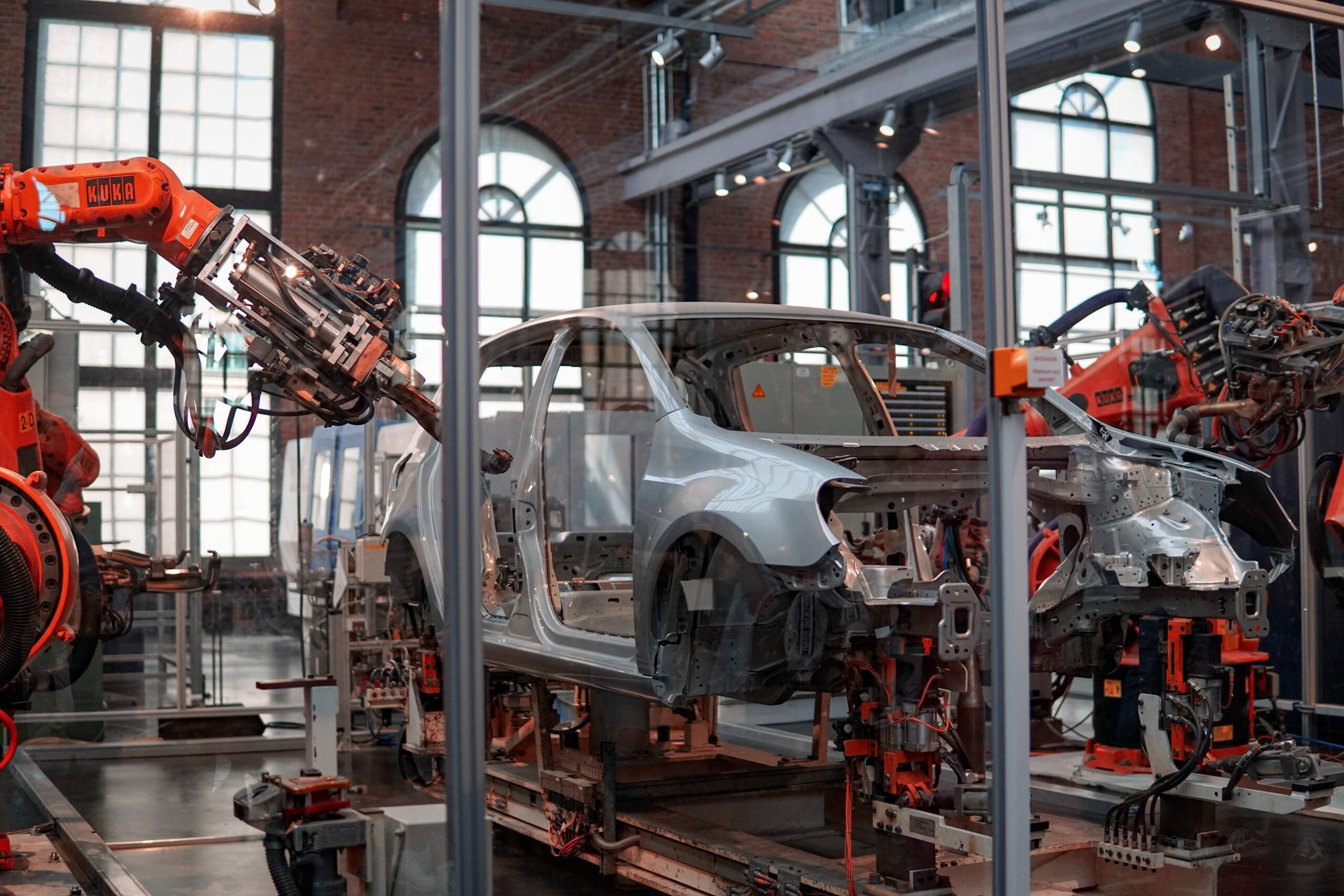
Aachen/ Berlin/ Hamburg/ Vienna, 2.6.2022. Car companies have significantly influenced the negotiations on the unsigned trade agreement between the EU and the Mercosur countries - and would benefit particularly from it. This is shown by the study published today:Mobility turnaround slowed down. The EU-Mercosur Agreement and the car industry”. The lobbying work was not only carried out by the companies themselves. Internal e-mails show how employees of the German Ministry of Economic Affairs and the EU Commission actively approached business associations to inquire about their wishes and feed them into the negotiations with the Mercosur states. The study is published by Misereor, Deutsche Umwelthilfe, Greenpeace Germany, PowerShift, Attac Germany, Attac Austria and the Network of Fair World Trade.
The result of the successful influence is a treaty text that would eliminate tariffs on cars with internal combustion engines, car parts and raw materials for car production, as well as promote the export of fuel based on food and feed. As a result, the agreement increases the consumption of fossil fuels in transport and promotes climate-damaging resource depletion. “This agreement slows down the much-needed mobility transition at the expense of public transport,” criticises Hanni Gramann of Attac Germany. "We should focus on resource-efficient and climate-friendly alternatives that enable mobility for all people instead of meeting the profit expectations of the automotive industry."
Demands for the conclusion of trade agreements such as EU-Mercosur have been growing ever louder since the war in Ukraine. By contrast, the author organisations of the study see the risk of cemented dependence on fossil fuels and the expansion of soybean and sugar cane cultivation for use as fuel at the expense of climate and world food through tariff reductions for combustion and agrofuels “More than ever, agricultural land is needed for food security, not for the production of meat or fuel for cars. With this agreement, the automotive industry wants to secure the export of its climate-damaging combustion engines for decades. At the same time, the agreement encourages even more food such as soy and sugar cane to end up in the tank. This would further fuel the global food shortage based on a distribution crisis", comments Tina Lutz from Deutsche Umwelthilfe.
The study describes in detail how the automotive industry benefits from close interaction with politics. These include the gradual elimination of all tariffs on cars and car parts and on important raw materials such as iron and steel, aluminium, copper, lead, zinc and lithium, which is important for electric cars. The Mercosur states also waive export taxes on soy, biodiesel and cowhide (car seats). "The EU-Mercosur Agreement is a car-versus-meat deal with one main objective: To save manufacturers of climate-damaging cars production and import costs. This has nothing to do with a fair and sustainable trade agreement. It needs to be stopped", explains Lis Cunha of Greenpeace.
The agreement also poses enormous risks to the climate, the environment and human rights. It would facilitate and increase the export of soy, bio-ethanol from cane sugar, cowhide and metallic raw materials for the automotive industry. "As the study shows with case studies, livestock farming, cultivation of soy and sugar cane as well as mining of metallic raw materials in Brazil, Argentina and Paraguay are mainly responsible for deforestation, displacement of indigenous communities, environmental damage and human rights violations", explains Armin Paasch from MISEREOR. "The sustainability chapter of the agreement, on the other hand, does not provide for any sanctions if such damage occurs."
"The time has come for the EU to recognise the problems associated with non-transparent and undemocratic agreements such as EU-Mercosur", says Jeremy Oestreich of PowerShift. "In order to effectively protect the climate, the environment and human rights, we finally need a trade policy that not only serves a few very powerful lobby groups." Ludwig Essig, coordinator of the Just World Trade Network, adds: "Especially in these times, a fundamentally new trade and investment policy is absolutely necessary. This requires transparent and democratic negotiations, strong sustainability chapters and an end to the weakening of our environmental and social standards."
—
* Editors of the study "Mobility turnaround slowed down. “The EU-Mercosur Agreement and the car industry“ by Thomas Fritz are: Misereor, German Environmental Aid, Greenpeace Germany, PowerShift e.V., Attac Germany, Attac Austria, Fair World Trade Network.
—
Background:
At the end of June 2019, the European Commission announced that it had reached an agreement in principle on a trade agreement with Mercosur. Since then, it has published some parts of the contract. It will be part of a wider association agreement with Mercosur. Negotiations were also concluded on 18 June 2020 for the remaining parts of the Association Agreement. However, its text has remained unpublished so far. So far, the Association Agreement has neither been signed nor ratified – also due to resistance in some EU countries (including Austria). The EU Commission is trying to overcome this resistance through insufficient and non-binding additional protocols with the Mercosur states.

 English (US)